The Raki or Tsikoudia
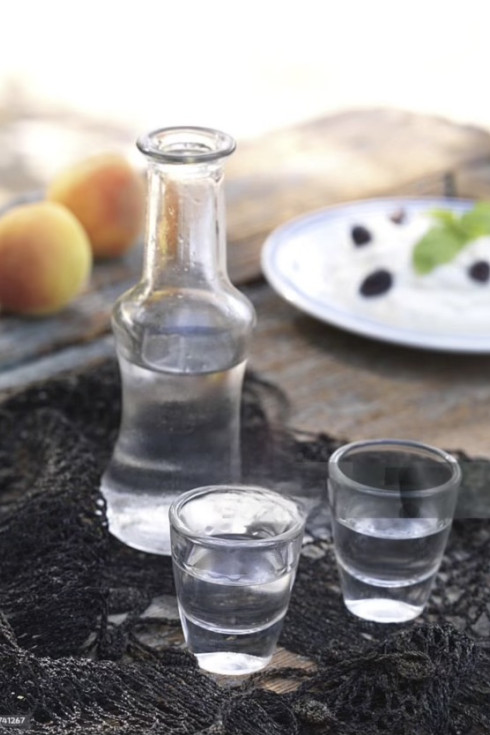
Photo GalleryRaki is the emblematic acohol of Crete. It is offered spontaneously, shared without formality, and enjoyed to celebrate hospitality, friendship, and the simple moments of life. Raki go with human connection far more than it seeks to impress with its strength.
The history of Cretan raki
Raki, also known as tsikoudia, has its roots in Crete’s long winemaking tradition. Produced from the distillation of grape pomace, it has been made for centuries in villages, often in an artisanal and family-based way. Each region, each family, has developed its own know-how, passed down from generation to generation. Long reserved for domestic use, raki has gradually become a powerful symbol of Cretan identity and its deep attachment to the land.
Making raki
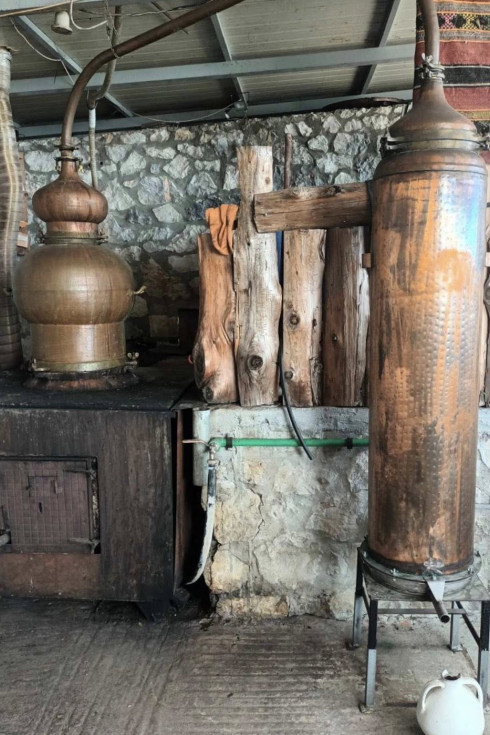
The production of raki begins after the grape harvest, when the pomace is left to ferment before being distilled. This distillation process, known as kazani, takes place in traditional stills and becomes a true moment of togetherness. Families and neighbors gather, share a meal, talk, and taste the first drops. The result is a clear, strong spirit, usually between 40 and 45 percent alcohol, whose quality depends as much on the raw ingredients as on the distiller’s experience.
An everyday spirit, not about excess
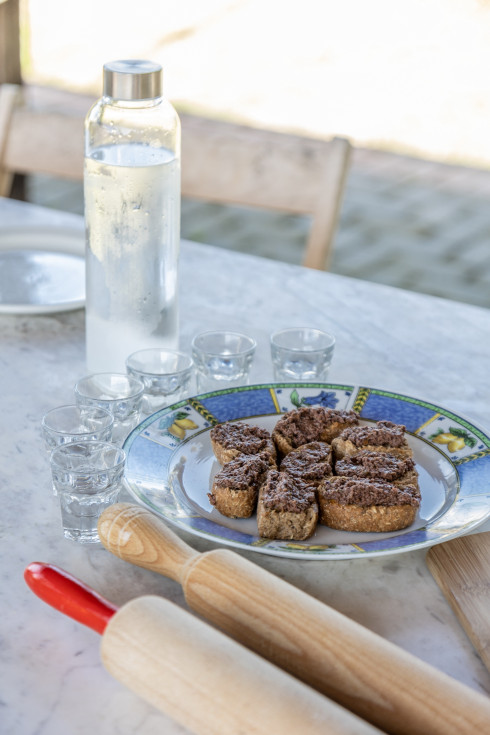
In Crete, raki is not associated with excessive or party-style drinking in the Western sense. It is consumed in small quantities, often after a meal, during an impromptu visit, or to accompany a conversation. Found in both homes and cafés, it is part of the local rhythm of life. Above all, raki is an excuse for connection, a gesture of welcome and respect rather than a pursuit of intoxication.
A drink filled with values
Raki embodies values deeply rooted in Cretan culture: generosity, conviviality, simplicity, and sharing. Offering a glass of raki is offering a moment, a sincere gesture. Each glass tells a story of land, patient work, and transmission, reminding us of the strong bond between people, their environment, and their traditions.
Conclusion
Cretan raki is far more than a strong spirit: it is a living symbol of the culture and soul of Crete. Tasting it means stepping into a moment of genuine sharing, where what matters most is not the glass itself, but what it creates between people.
Read More
What to do in Rethymno : history, beach and gastronomy
Rethymno is a subtle mix of seaside town and cultural destination. In just a few minutes on foot, you can move from the narrow streets of the old ...

Sustainability & EcoEvents
Preserving the Natural Environment Crete has exceptional biodiversity, with diverse landscapes, protected areas, and fragile ecosystems. This is why ...
Rethymno's Carnaval
Every year, the city of Rethymno comes alive thanks to its carnival. The streets are filled with parades, unique costumes, and music, creating a ...